LinkedIn

Innovation and Technology

Technologies that prepare us for change

I transform advanced concepts into resilient, deployable technologies that integrate autonomy, spatial computing, and sustainability. Each product operates within larger, interconnected networks, which ensures maximum compatibility and continuity. Through connecting leading tools with human-centred design, each technological advance is capable to connect with existing systems and evolve its approach, leading to enhanced resilience, training, and operational capability for individuals, organisations, and societies.

I am recognised as a pioneer in applied technological innovation, with work featured in the INNOVATION IS GREAT BRITAIN campaign alongside Nobel laureates, highlighting contributions that shape global industry and societal resilience.

My innovations integrate AI-XR, digital twin analytics, and sustainable design into operational systems that deliver measurable impact. Through a combination of creative concept design, rapid prototyping, and through-life integration, I have transformed early-stage ideas into deployable solutions for defence, infrastructure, and environmental systems.

Each project is deliberately conceived as an interoperable component within a broader operational ecosystem that ensures innovations in AI-XR, autonomous platforms, or sustainable habitats can enhance, reinforce, and grow from each other to deliver cohesive resilience and performance throughout concept to deployment.

Innovation Is Great Britain campaign recognition featuring Philip Pauley

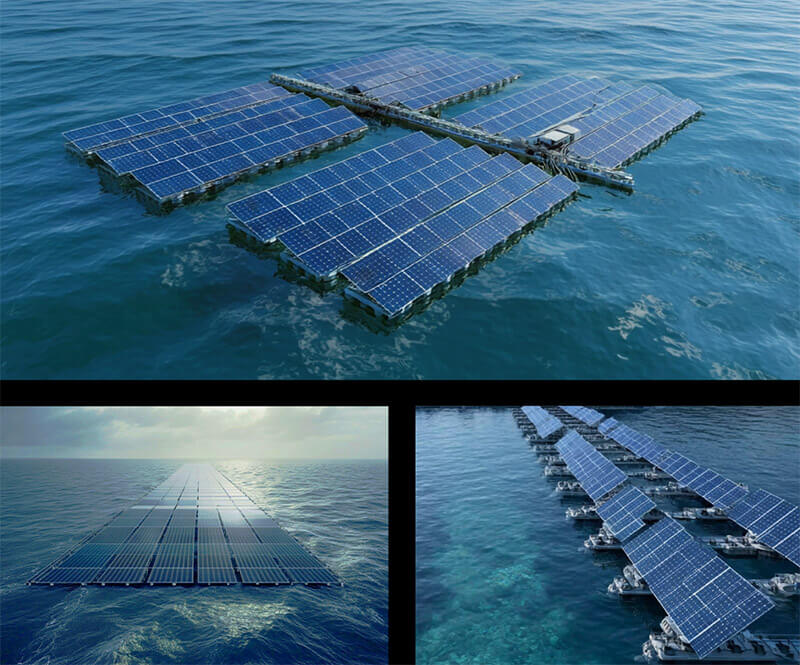
I pioneered the modular design of floating solar farms, a breakthrough solution that has become a key driver of the global shift toward clean, renewable energy.

As of early 2024, the total global installed capacity of floating solar was approximately 7.8 GW, up from 2.6 GW in 2020, with the world's largest individual plant being the 320 MW Dezhou Dingzhuang installation in China.

While installed capacity indicates peak power, actual annual energy production is lower due to night, weather, and seasonal variation, yet these systems consistently displace carbon-intensive electricity generation and support climate mitigation objectives.

By integrating autonomous energy generation, environmental monitoring, and scalable maintenance strategies, the designs enable deployment on reservoirs, inland waters, and offshore environments. These early concepts demonstrated technical feasibility well before mainstream adoption, contributing to growing interest in water-surface solar and influencing subsequent commercial and government projects.

Modular floating solar farm concept with large-scale and array deployment views

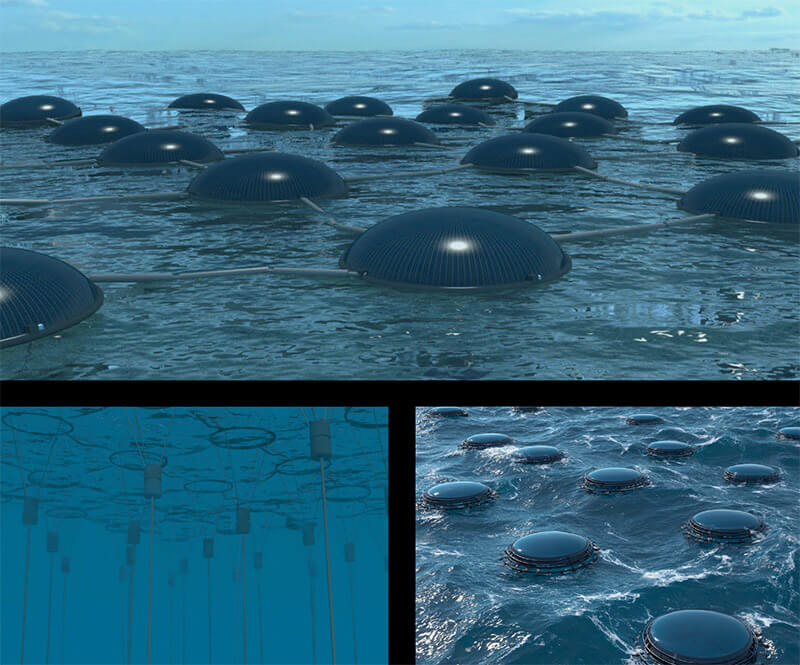
I developed the first modular concept for floating energy farms, now a globally recognised renewable energy solution that contributes directly to the clean energy transition.

My tidal and wave energy designs harness the oceans' natural forces to generate clean, reliable, and scalable power. By capturing predictable tides and waves, they complement solar and wind energy, reduce fossil fuel dependence, and help accelerate the transition to a low-carbon future.

A key strength is modularity and adaptability. Each system can be scaled from small coastal communities to large industrial grids, while advanced monitoring and control optimize energy capture, efficiency, and maintenance. The designs are also carefully engineered to minimize impact on marine ecosystems, ensuring sustainable operation in diverse environments.

Beyond energy generation, these systems reflect a broader philosophy of designing infrastructure in harmony with natural forces. They act as living demonstrations of how technology can deliver environmental stewardship, economic opportunity, and societal resilience, proving that innovation and sustainability are inseparable - offering a blueprint for future infrastructure that is both high-performing and ecologically responsible.

Floating energy farm concept with modular ocean energy units

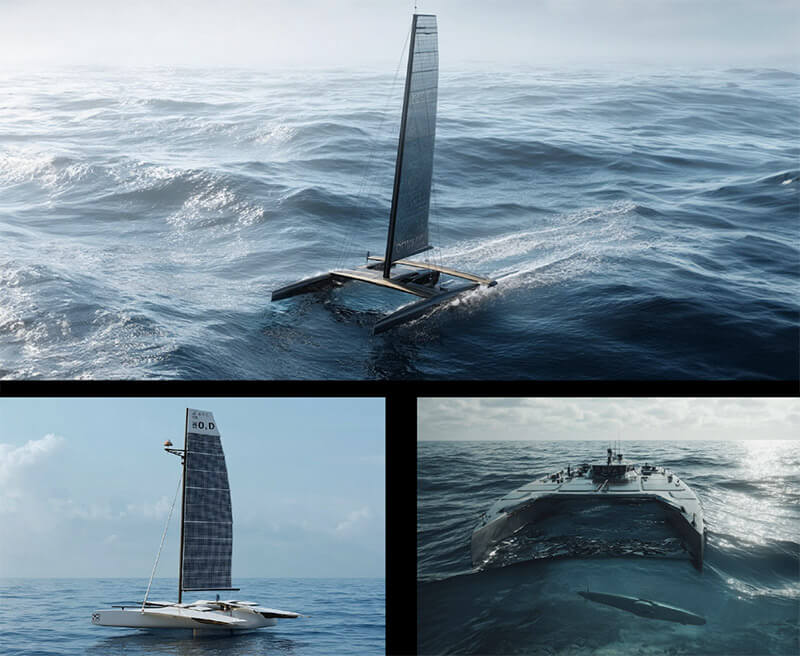
I fostered the concept of solar sail-powered drones for autonomous ocean monitoring, combining wind-driven propulsion with solar-powered sensors and communications.

Developed between 2010 and 2013, my concept envisioned unmanned surface vehicles powered entirely by wind and solar energy, capable of indefinite deployment across open ocean environments without fuel or crew. By combining sail-driven propulsion with integrated sensor arrays and real-time communications, these platforms could deliver continuous environmental observation at a fraction of the cost of traditional research vessels.

The concept, documented in press and publications at the time, anticipated what has since become a growing field of autonomous maritime technology. Where early ocean monitoring relied on expensive crewed vessels and fixed buoy networks, wind and solar-powered drone platforms now deliver persistent climate data, track marine ecosystems, and operate in conditions too hazardous for human crews.

These early designs reflect the same systems thinking that runs through all my work — designing platforms that are self-sustaining, resource-efficient, and capable of operating continuously in hostile environments. The principles established here, autonomous operation, renewable propulsion, and closed-loop energy management, directly inform the resilience architectures I apply across habitat engineering, digital twin platforms, and operational continuity systems today.

Solar sail-powered autonomous ocean drone concept for long-duration monitoring

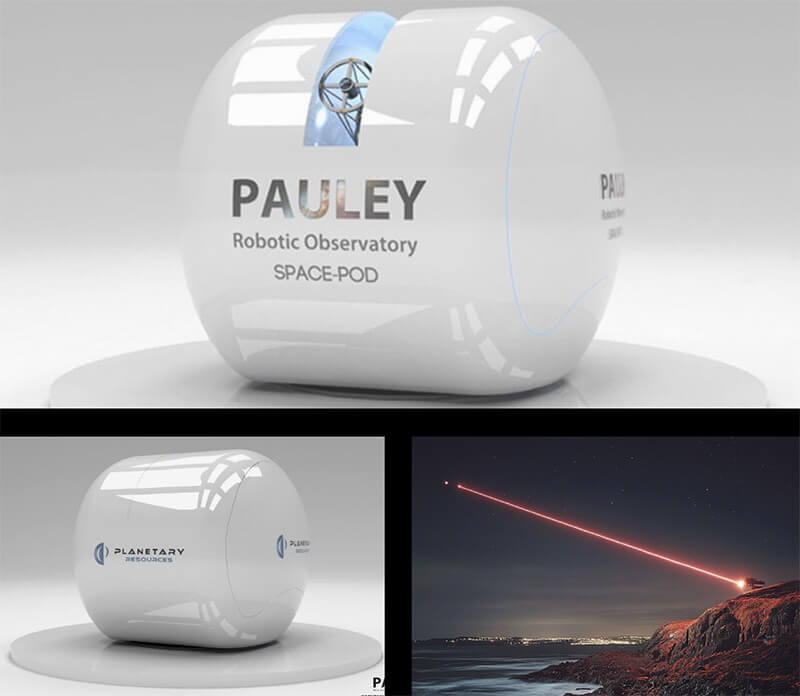
I established an autonomous observatory space pod for deep-space observation, integrating precision optics and solar-powered systems for continuous discovery.

Alongside my fascination with Earth, Ocean and Subsea observation and ecosystem monitoring, I developed a system of micro autonomous space observation pods designed for astronomy and environmental tracking. The goal was to create a network capable of delivering real-time data for early warning purposes, whether for personal insight, academic research, or governmental decision-making. By monitoring both natural and human-influenced changes from above, these pods act as a bridge between technology, the environment, and actionable knowledge.

This approach reflects the systems-thinking at the heart of everything I do. Just as I design self-sustaining habitats and smart mixed-use developments, these pods operate as part of an interconnected network-each autonomous yet contributing to a larger ecosystem of information and decision-making. They embody the same principles of resilience, adaptability, and proactive response that I apply across my work, from immersive AI-XR training solutions to urban sustainability initiatives.

Ultimately, the micro-space pods demonstrate how observation, technology, and human insight can converge to protect, inform, and empower communities. They complement my broader mission of designing environments-whether terrestrial or orbital-that are intelligent, responsive, and in harmony with both human and natural systems. This is about creating foresight and preparedness, ensuring that the choices we make today are informed by a continuous, holistic understanding of the world around us.

Autonomous robotic observatory space pod concept with deployment views

I founded the vision of the modular transport Halo INTERCEPTOR, combining adaptive architecture with autonomous systems to create a versatile mobility platform.

Back in 2013, I developed the first modular transportation system, Halo INTERCEPTOR, laying the foundation for a multi-modal autonomous network supporting environmental monitoring, logistics, and commercial operations. I've since evolved it into a universal platform with interchangeable payloads, integrated into advanced digital twin environments to simulate, predict, and optimise performance before deployment.

Built on a closed-loop methodology, every component is designed for 3D printing to enable rapid local manufacture, real-time maintenance, and reduced supply chain dependence. The networked approach ensures that vehicles, depots, and digital twins form a continuous feedback loop, where operational data informs iterative improvements, risk mitigation, and predictive maintenance.

By combining modular autonomy, on-demand production, and digital twin oversight, the system becomes a scalable, resilient infrastructure for monitoring ecosystems, delivering supplies, and supporting civic and commercial services within a broader vision of self-sustaining, systems-driven environments.

Halo INTERCEPTOR modular autonomous transport platform concept